
Ultimate Guide: Mount Taranaki Summit Track

Mount Taranaki Summit Track
Ultimate Guide: Mount Taranaki Summit Track
The Mount Taranaki Summit Track is an advanced, 8–10 hour climb that rewards fit hikers with vast volcanic views and a true sense of achievement. Expect steep scree, stairs and exposure, and go only in settled weather with the right gear and a turn-back plan. Start early, pace yourself, and you’ll be back in Stratford with a story for the books.
Overview & Difficulty
The Mt Taranaki Summit Track is the ultimate trekking experience. It’s challenging and should only be attempted by hikers with strong fitness and experience. Standing at 2518 m, the summit route is more difficult and dangerous than it may appear—attempt it only in settled weather. Expect 8–10 hours return. Start early to ensure you’re back before sunset; the views from the top make every step worth it.
Track at a Glance
- Time: 8–10 hours return
- Elevation: 2518 m summit
- Start points: North Egmont Visitor Centre or Stratford Plateau (Pembroke Road)
- Terrain: Forest, tussock, gorge, rocky stairs, scree/scoria, ridge exposure
- Water: None on the track
- Toilets/Shelter: Last shelter and toilets at Tahurangi Lodge
- Season: Best in settled summer conditions; winter requires alpine skills
Start Points & Map
You can begin from either:
- Stratford Plateau entrance on Pembroke Road (Stratford), or
- North Egmont Visitor Centre (North Egmont entrance).
Route Options
Stratford Plateau Route (to Mangonui Ski Lodge → Tahurangi Lodge)
From the Stratford Plateau, the track snakes around a gorge before you cross to reach Mangonui Ski Lodge. From there, you’ll encounter rocky sections and stair climbs before arriving at Tahurangi Lodge—usually about 2 hours from the car park.
North Egmont Route (via Tahurangi Lodge)
The hike begins on a dirt road sheltered by forest, then opens to tussock as you climb towards Tahurangi Lodge. The track progresses into a gully with large boulders and orange poles to guide your way. Because the gully sees little sun, it can be very slippery. Higher up, the route becomes stairs and exposed ridge—challenging, but the views are breathtaking.
Hazards, Weather & Safety
- Above Tahurangi Lodge, the route becomes more technical and exposed.
- The gully can be slippery, especially in shade or after rain.
- Expect a long scoria/scree section where every step slides—progress can be slow.
- The final push up “The Lizard”—a steep rocky spine—takes about 1–2 hours.
- The summit crater holds snow year-round and can be icy—take care.
- Descent is where most accidents happen—go slowly, and use trekking poles if you have them.
Best Time to Climb
Plan for settled summer conditions. Start early in the morning to allow enough time for a safe return. Avoid poor weather and strong winds—turn back if conditions deteriorate.
What to Bring (No Water on the Track)
- 2–3 L water (none available on the track)
- Food for a full day
- Waterproof jacket & trousers
- Sturdy boots with good grip
- Warm layers, hat, gloves, sunscreen
- Trekking poles (helpful for the descent)
- First aid kit; optional PLB (personal locator beacon)
The Experience
Once you reach the summit, the Tasman Sea stretches on one side and the Central North Island ranges on the other. The hard work fades fast—replaced by real achievement and a sense of being on top of the world. For fit, experienced trampers, Mt Taranaki Summit is absolutely one for the bucket list.
Descent
After enjoying the summit, descend slowly and carefully. The scoria, gully, and stairs can be tricky on tired legs. Poles are very useful here.


Stay with us in Stratford
Base yourself at Antonio Mews Motel – quiet, spotless studios & apartments with parking at the door, fast Wi-Fi, heat pumps/AC, and handy kitchenettes. Perfect after a big day on Taranaki.
King Studio
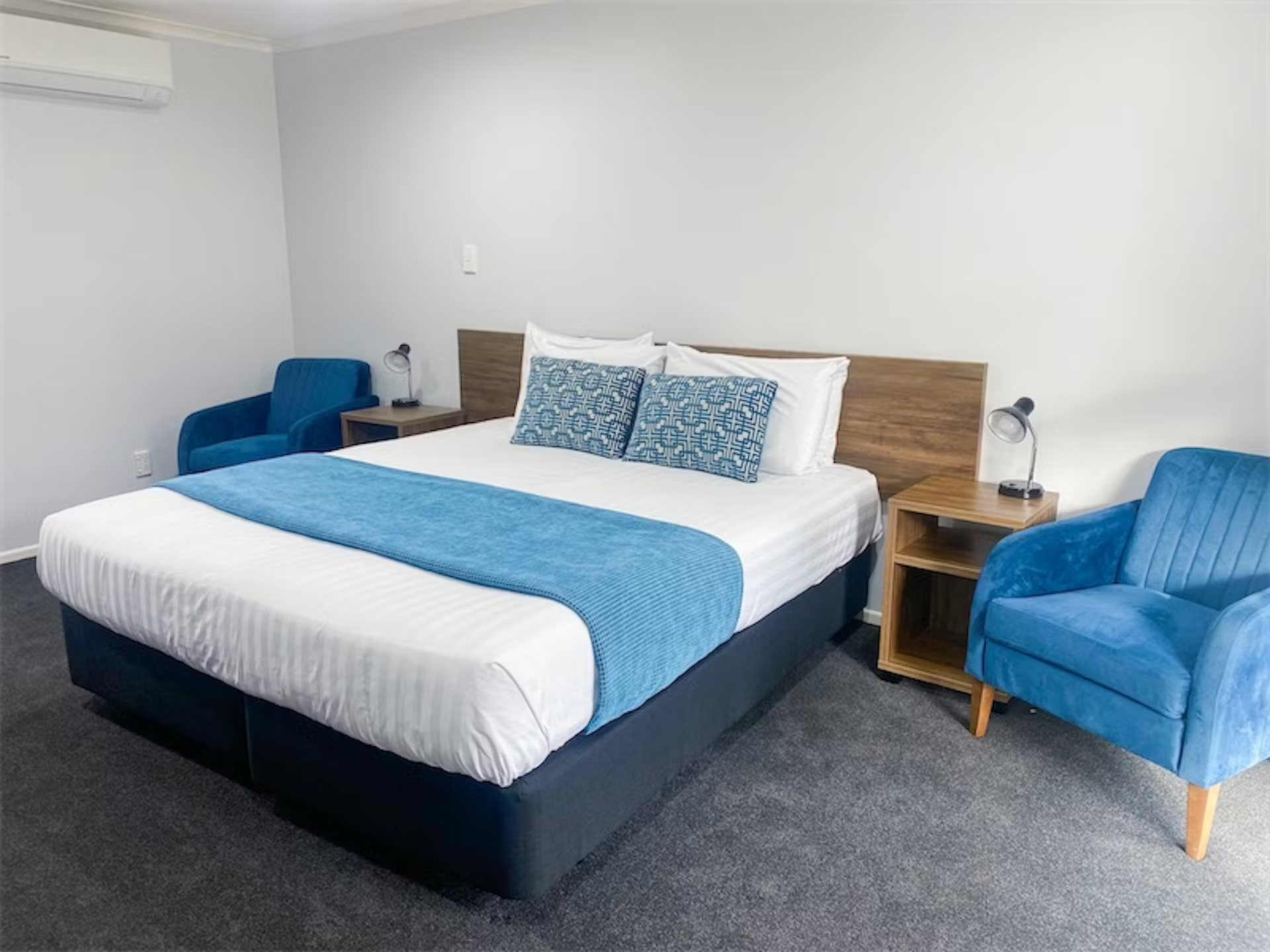
Room Overview
Modern, super-clean studios and apartments with everything you need:
– Free parking right outside
– Reliable Wi-Fi & 50+ Sky channels
– Heat pumps / AC for year-round comfort
– Kitchenettes to prep an easy meal
